

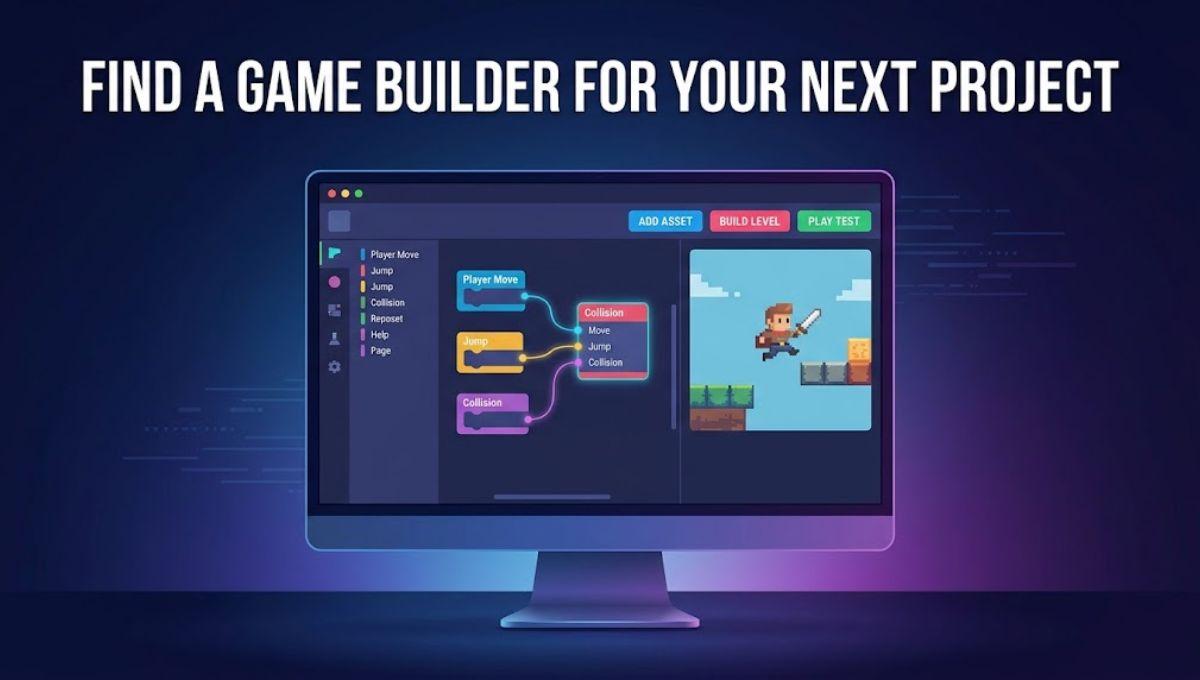
Building a game is a thrilling trek, but one of your first and largest steps is picking the right game maker. Game builders are software applications that allow you to make games using various tools for designing characters, making game levels, adding sounds, and more to define gameplay mechanics. There are also game builders that are geared towards beginners (with drag-and-drop functions rather than requiring you to code, as well as ones where you need to code.
With all these game development tools, now you just have a headache deciding which one fits you best. Some platforms are for simple mobile games, others for intricate multiplayer undertakings. A bad decision can result in lost time, frustration, and money down the drain. So you want to know your goals before you make a decision.
The good news is that you can get away with spending less and less on game development these days. So now even non-technical people can make their ideas come to life using Astrocade and similar no-code platforms. Understanding what to look for in a game builder will help you and your team find one that suits your vision and enables you to make a great game.
Define Project Goals
When selecting a game builder, begin by identifying your project's goals. Knowing precisely what you want to do will help you trim your list and avoid selecting a platform that falls flat in meeting your needs. All game projects are different.
Your target market should also be factored in. The platform on which you will play the game is also significant. Certain game builders are tailored for mobile devices, while others are for desktop or web games. When selecting a game engine for publishing across multiple platforms, ensure the game builder supports cross-platform production.
Compare Platform Features
After you have a clear idea of your project scope, it’s time to compare the capabilities of each game builder. Beginners tend to do well with simpler interfaces that aren’t as cluttered and include drag-and-drop functionality. Visual scripting has also been introduced, which is a good feature. It lets you design gameplay rules as visual nodes rather than by writing traditional code.
This is particularly useful for those with little programming background. Asset management tools are a must-have. Some game makers offer packs of graphics, sounds, animations, and templates you can buy to speed up your work. These materials are great for prototyping and quickly moving ideas forward.
Check Learning Curve
The learning curve of a game builder is a key element that doesn’t get enough attention. Even the best platform may not be worth it if it’s going to take you forever to learn to use it or gets too complicated. For novices, a platform with a shallower learning curve can make the development process more fun. Simple tutorials and documentation guides tailored for beginners, as well as guided onboarding experiences, enable users to get started quickly.
There are a lot of educational resources available on many game builders. Video tutorials, written manuals, user community forums, and sample projects can dramatically shorten the amount of time it takes to learn a platform. Check out the learning materials available for a tool before you buy it.
Conclusion
The choice of game engine is one of the most crucial decisions in the game development industry. Choosing your priorities, reviewing the features, evaluating the learning curve, and looking at the budgets and support from the community can help you make up your mind. The best choice of platform will foster easy development, allow high productivity, and enable the rapid translation of your ideas into playable experiences.
A winning game project chooses a game builder that is best suited to its needs and future expectations. Just as a team like Robocade Water Park has the right strategy to win, every software project has the right tools that are good for it. Invest time in researching and making an informed decision today, and you’ll save yourself a lot of work tomorrow, as well as increase the odds of making a game that players truly want to play.
FAQs
How do I find a game builder?
Pick a game builder based on your needs in the following aspects: your goal, budget, skill level, and features you want. A good platform is one that accommodates the needs of your project.
Can you build games with a game builder if you're a beginner?
Many game creators are intended for beginners. Presenting dragged and dropped elements, guidelines, and patterns that make game-making much easier.
Do free game builders have any value to us?
Paid or not, game-making software can be extremely useful for educators. They provide opportunities for developers to learn, gain experience, and build a game before investing in premium features.
Which game builder is best for mobile games?
Many contemporary game builders allow for the creation of mobile games. The best option depends on your project, publishing goals, and desired features.
Why does community support matter for a game builder too?
Supportive communities mean tutorials, troubleshooting help, shared resources, and great advice. It makes it easier to learn and helps developers to resolve their issues sooner.

2 Comments
Pingback: From Bottles Back to Taps: The Policy Playbook Cities Are Testing - Paper Earn
Pingback: Business Analysis: The Money Flowing Into AI, and the Returns Investors Expect - Paper Earn