

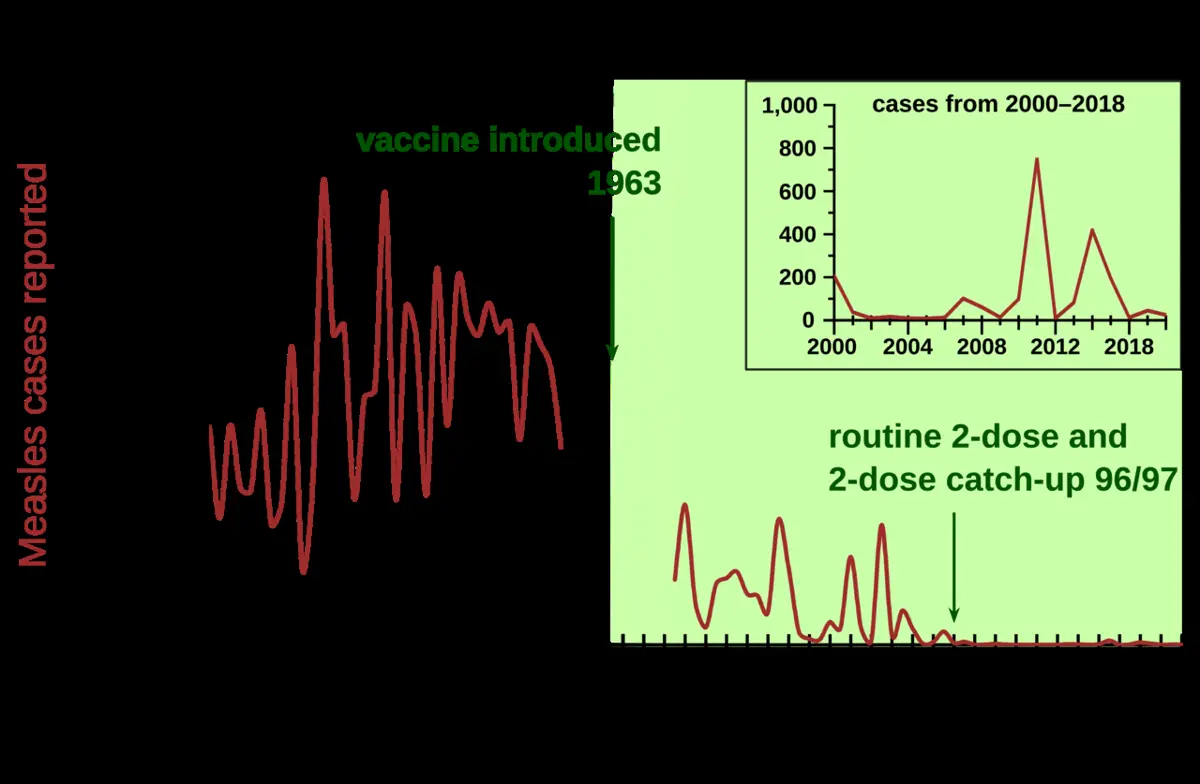
US measles cases grew by 8 percent in just one week to a total of 4,410, new figures show. Doctors say the pattern is familiar: where vaccination rates dip below the level needed for community protection, the highly contagious virus finds opportunities to spread, particularly among unvaccinated children.
The reasons behind the rise
The rise is not being attributed to a single cause. Declining childhood vaccination in certain districts, missed doses during disrupted healthcare periods and introductions from abroad have all played a part. Because measles spreads through coughs, sneezes and even shared airspace, a small number of imported cases can generate clusters quickly where immunity is patchy, as our earlier reporting on vaccine research and public health has also described in a different context.
Schools and nurseries are often the first places where clusters become visible, because young children mix closely and the youngest pupils may not yet have completed both vaccine doses. Education settings in areas with cases are being asked to check immunisation records, exclude symptomatic children promptly according to local guidance and share factual information with parents, helping to protect classmates who are medically vulnerable.
For busy families, the practical takeaway is simple and calm. Check that children have had two doses of the MMR vaccine, keep a note of the dates, and know the early signs to watch for, especially a high temperature followed by a blotchy rash a few days later.
How measles usually develops
The symptoms develop in stages, which can make the first days easy to mistake for flu. Fever rises, a persistent cough and sore eyes develop, and then the well-known rash emerges, usually beginning around the hairline. Readers who followed our coverage of recent medical research and vaccine trials will know that early, accurate information is one of the best tools public health teams have, and the same applies here: knowing the signs means faster isolation and fewer onward infections.
Protection through immunisation
The official guidance is unchanged and straightforward. Two doses of the MMR vaccine, routinely given in childhood, provide about 97 percent protection against measles. Adults who are unsure of their status, especially those planning international travel or working in healthcare, are encouraged to check their records and arrange a catch-up dose if needed. Vaccination not only protects the individual; high coverage also shields infants too young to be immunised and patients whose medical treatment suppresses their immune system.
There is also a generational story behind the figures. Measles was so effectively controlled after vaccination became routine that many younger parents, and even some younger clinicians, have never seen a case. That success can breed complacency: a disease that feels historical may not feel urgent when a clinic appointment competes with work and school runs. Public health campaigns around the current increase are therefore partly educational, reintroducing a familiar but forgotten illness to a new audience, describing its symptoms honestly and explaining that the vaccine’s two-dose schedule, not a single dose, is what delivers protection of about 97 percent. The tone of that communication is deliberately calm. Officials repeatedly stress that the tools to reverse this trend already exist in every community pharmacy and family practice, and that the 8 percent weekly rise, while unwelcome, is exactly the kind of early signal those tools are designed to answer.
What officials are doing now
The weekly figures will keep fluctuating as new clusters are confirmed and older ones close, but the underlying lesson is stable. Measles exploits gaps in immunity with unusual efficiency, and closing those gaps through ordinary, well-understood vaccination is how previous rises have been reversed. With accurate information and timely action, health officials say the current increase can be brought under control without drastic measures.
A five-minute check of a child’s vaccination record, a quick call to the clinic if a dose is missing and a note of the symptoms to watch for cover almost everything a parent needs to do.
The rise to 4,410 cases is a reminder rather than a crisis, specialists insist, and reminders only work if people act on them. A short record check today is considerably easier than two weeks of illness and isolation later.
Full official guidance on symptoms, vaccination schedules and outbreak updates is published by the Centers for Disease Control and Prevention on its measles pages, which health departments recommend as the first reference point for families.
