

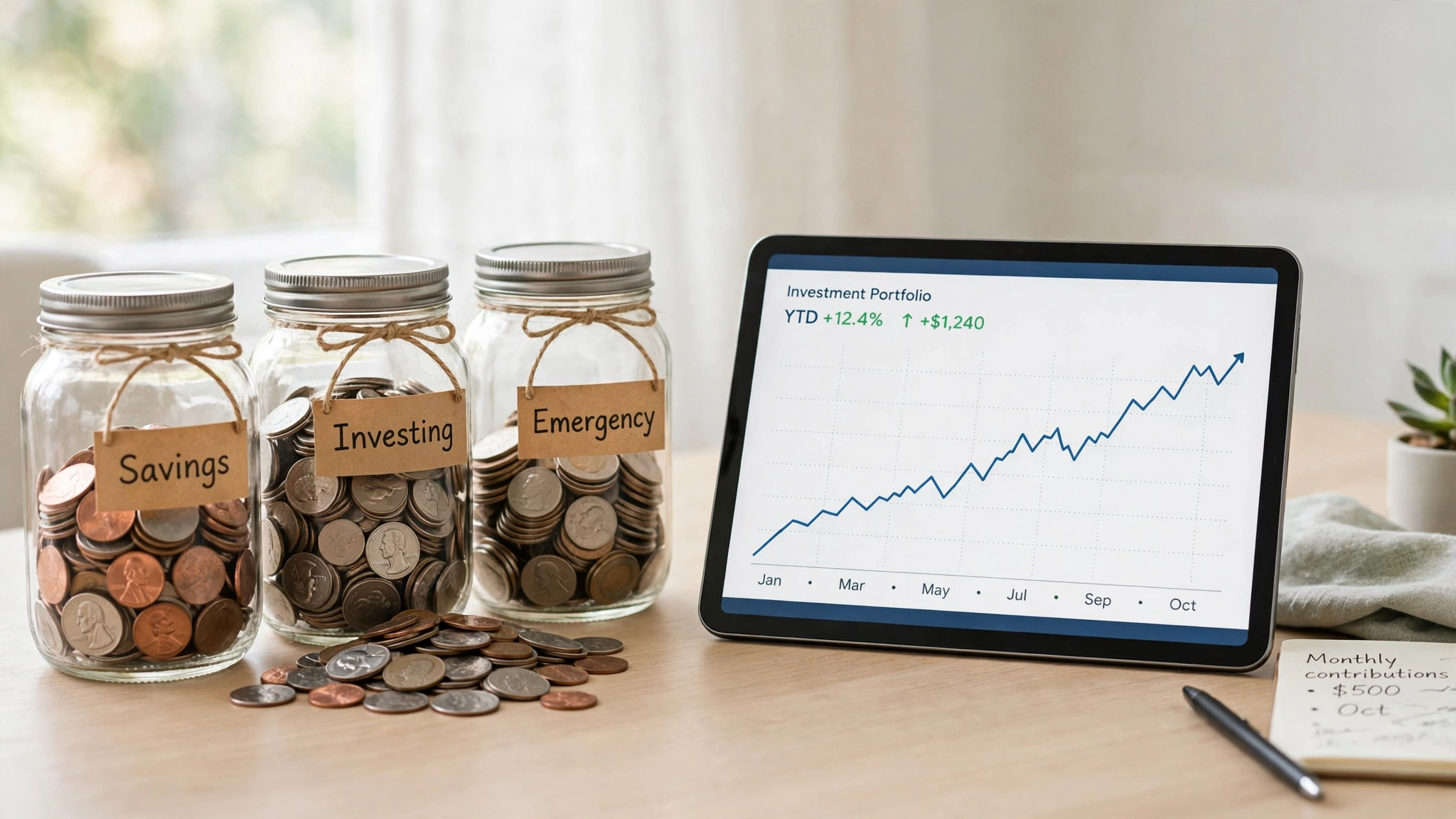
It is the most common money question of 2026: should spare cash sit in a high-yield savings account earning a respectable rate, or go into index funds that promise more but wobble along the way? The honest answer is that both are good tools — for different jobs. Choosing between them starts not with returns, but with a calendar.
What a High-Yield Savings Account Really Offers
High-yield savings accounts pay several times the interest of a traditional current account while keeping your money instantly accessible and, in many countries, protected by deposit insurance schemes. Central banks such as the US Federal Reserve publish the policy rates that ultimately shape what banks can offer, which is why savings rates have stayed attractive while inflation cools.
The trade-off is simple: safety and liquidity in exchange for modest growth. After inflation and tax, a savings account usually preserves wealth rather than multiplying it. That makes it perfect for money with a deadline — an emergency fund, a house deposit due within two years, a tax bill you know is coming.
What Index Funds Do Differently
An index fund buys a slice of hundreds or thousands of companies at once, tracking a market benchmark rather than betting on individual winners. As Investopedia explains in its investing guides, the approach wins through low fees and broad diversification: you give up the dream of picking the single best stock and in exchange own a piece of the whole market’s long-term growth.
Historically, diversified equity indexes have outpaced savings rates by a wide margin over periods of ten years or more. But the path is bumpy — a bad year can show a double-digit loss on paper. Index funds are therefore a poor home for money you will need soon, and an excellent one for money you will not touch for years.
The Question That Decides It: When Do You Need the Money?
Under three years: savings wins
If the money has a job before 2029 — a wedding, a deposit, a career break — a market dip at the wrong moment could force you to sell at a loss. A high-yield account guarantees the number will be there, and the interest is a bonus, not the point.
Over five years: index funds pull ahead
For retirement savings, a child’s future education fund, or wealth you are building for a decade out, leaving everything in cash quietly loses to inflation. Time is what turns market volatility from a threat into background noise, and time is exactly what long-term money has.
The middle ground most people actually need
Real life is usually a blend: an emergency buffer in savings, then regular monthly investing into index funds for the long term. That structure mirrors how people actually build income and assets over time — the same patient, system-first thinking we described in our look at the trusted online presence educators build, applied to money instead of audiences.
A Simple Way to Split It
Start with one month of expenses in an instant-access savings account and build toward three to six months. Once that cushion exists, direct new spare cash into a low-cost, globally diversified index fund on a fixed monthly schedule, so you buy in good months and bad without thinking about headlines. Review the split once a year, or whenever your life changes — a new job, a baby, a planned move.
Neither tool is the enemy of the other. Savings accounts protect your plans; index funds grow your future. In 2026, the smartest savers are not choosing between them — they are giving each one the job it is actually good at.
