

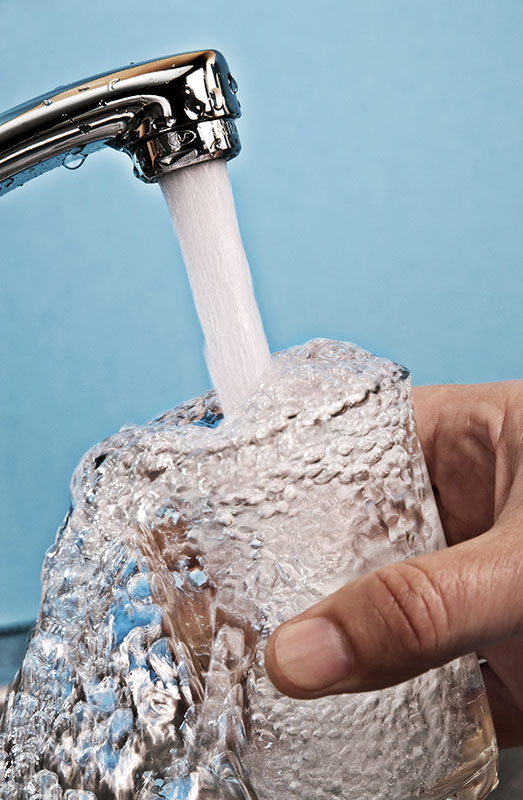
Microplastics — fragments and fibres smaller than five millimetres, most far smaller — have been detected in drinking water on every continent, in pristine mountain catchments and dense megacities alike. The finding unsettles people instinctively, and a market of filters promising protection has grown up around that unease. This year, however, the evidence base has sharpened considerably: better detection, realistic exposure studies, and the first rigorous head-to-head tests of what household filtration actually removes.
Understanding the findings requires separating three questions that headlines habitually merge: how much plastic is in the water, how much of it people actually ingest and retain, and what — if anything — it does to health. Our science and health reporting returns to that separation often, because the honest answers differ for each question.
Measuring a Nearly Invisible Contaminant
Detection was the original bottleneck. Particles below ten micrometres — the size most relevant to whether plastic can cross biological barriers — evaded standard analysis for years. Newer spectroscopic and mass-spectrometry methods have pushed reliable detection into the nanoplastic range, and results have revised exposure estimates both ways: some alarming early counts proved to be laboratory contamination, while other studies found bottled water carrying far more nanoplastic particles than previously reported.
The World Health Organization’s assessments at who.int have consistently struck a careful note: microplastics are widespread in drinking water, larger particles appear to pass through the gut without absorption, the evidence on smaller particles and on the chemicals plastics carry remains incomplete, and properly run conventional water treatment already removes the great majority of particles present in source water.
What the Filtration Tests Found
The new household studies are reassuringly concrete. Certified filters using sub-micron membranes or quality activated-carbon blocks removed the overwhelming majority of microplastic particles in test water — typically well above ninety per cent for particles in the sizes studied — with reverse-osmosis systems performing best of all. Simple measures helped more than expected: one widely reported study found that boiling hard tap water and letting it cool caused carbonate scale to trap a large share of microplastics, which an ordinary strainer then removed.
The same tests punctured some marketing. Loose carbon jugs performed unevenly, performance fell sharply when cartridges were used past their rated life, and filters themselves could shed fibres if poorly made — a reminder that certification to a recognised standard matters more than the word ‘microplastic’ on the box.
Proportion and Priorities
Researchers stress perspective. Drinking water is one exposure route among several — food, dust and indoor air contribute comparable or larger amounts — and no study has yet demonstrated clear harm to humans at typical environmental exposures, though laboratory evidence of inflammation and the known toxicity of some plastic additives justify continued caution and research. The most effective interventions remain upstream: better wastewater capture of fibres, tyre-wear reduction, and treatment-plant upgrades that cut particle counts for entire cities at once.
Regulators are beginning to move from monitoring to standards. The European Union has set requirements for measuring microplastics in drinking water so that member states report comparable numbers for the first time, and California has been working through a similar standard-setting process after mandating monitoring several years ago. Standardised measurement sounds bureaucratic, but it is the precondition for everything else: enforceable limits, honest comparisons between cities, and filtration claims that can be tested against a common yardstick rather than marketing. Researchers also want the focus widened beyond particles alone to the additives and absorbed pollutants plastics can carry, and to the very smallest nanoplastics, where the biological questions are sharpest and the measurement is hardest. Until those methods mature, the field’s most defensible position remains the one the evidence now supports: reduce exposure where it is cheap and proven to do so, fund the health research properly, and resist both complacency and alarm.
The Bottom Line
The new evidence lands in a sensible place: drinking-water microplastics are real, measurable and worth reducing; good filtration demonstrably reduces them further; and panic is not a finding any serious study supports. Separating signal from noise in a flood of particles is, in its way, the same skill the logistics industry is learning — as our look at warehouse robotics reshaping logistics work describes in a different setting.

1 Comment
Pingback: Warehouse Robotics Are Reshaping Logistics Work From the Inside - Paper Earn